
Wild Wellbeing: What is Forest Bathing?
Sarahlynn Etta | AUG 26, 2024
Wild Wellbeing: What is Forest Bathing?
Sarahlynn Etta | AUG 26, 2024
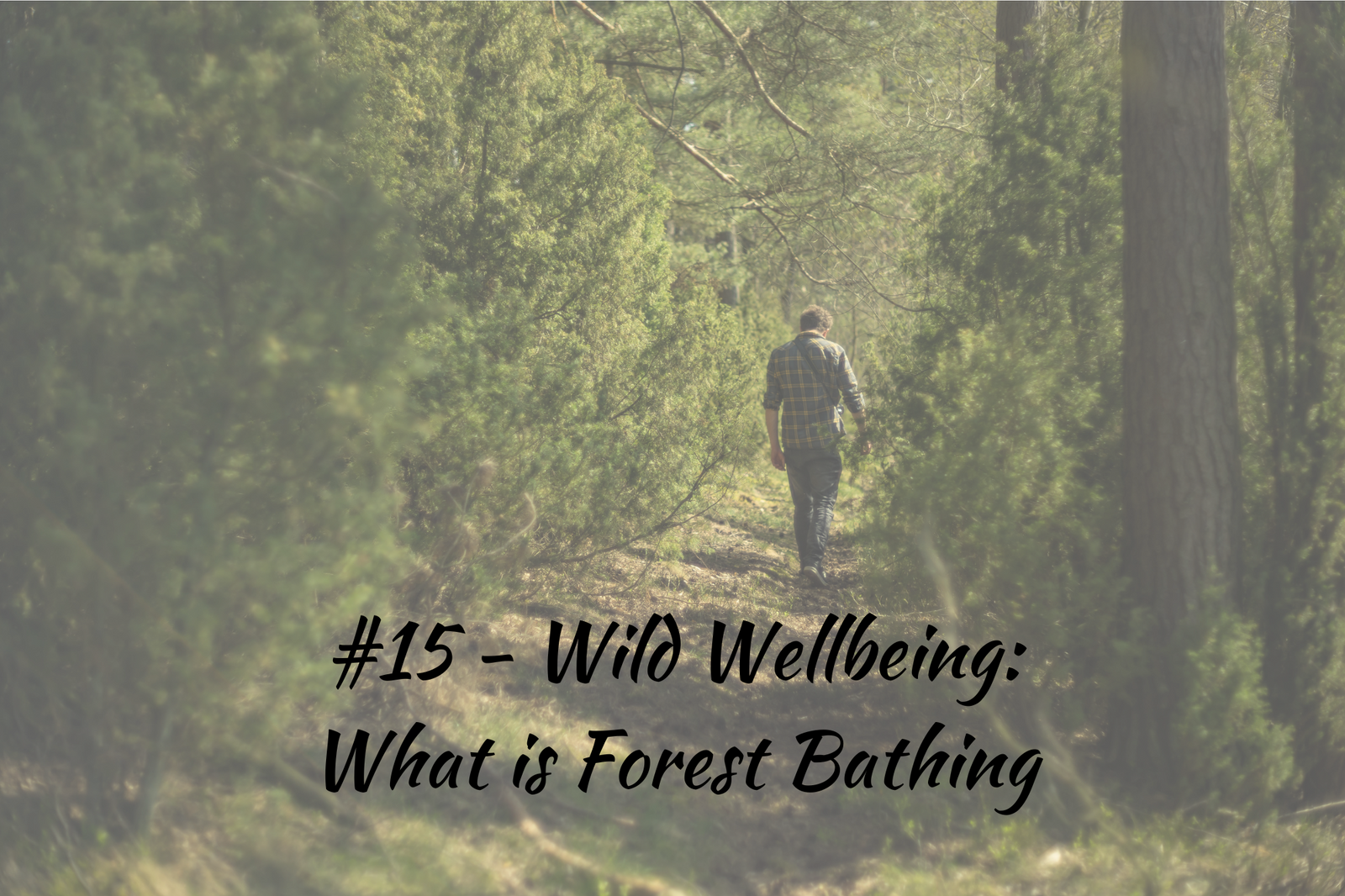
Slow down, engage your senses, and absorb the healing power of the nature with shinrin-yoku. Learn the art of opening yourself to the forest and explore the benefits of the beautiful practice. Download the guide.
Listen on Substack | Listen on Spotify | Listen on Apple
In this episode, I discuss:
Episode transcript:
"...Today, I would like to continue musing a bit on the healing power of nature, and the idea of being fully present to the moment in the experience of nature. I want to talk about a Japanese practice called Shinrin-yoku, which translates as being in the atmosphere of the forest, or absorbing the forest atmosphere, or most commonly in English, we just hear forest bathing. And though the practice of walking through a forest, being present, slowing down, has of course been around for a very long time, this specific practice has been with us for just about 40 years, and it's based on three traditional Japanese concepts. Being so present to the experience and beauty of nature that it becomes very emotional beyond being able to be expressed in words. The idea of the interplay between light and the trees of the forest. And lastly, the beauty that can be found in both impermanence and imperfection. And based around these three concepts, we have this practice of really, really slowing down, of cultivating a very open and intentional awareness of everything that the natural environment has to offer, and of cultivating a deep gratitude for an appreciation of this process.
In the process of forest bathing, we are outdoors, so we are experiencing all the benefits of nature. We are cultivating a present moment awareness to everything around us. So we are reaping all the benefits of a mindfulness practice.
And Shinrin-yoku, as I referenced earlier, is a very, very slow process. So there's also this even greater potential relaxation to the nervous system, calming down of the activity of the brain as we really, really slow ourselves down.
And then of course, depending on how you are engaging with the forest or the environment that you're in, there's also the potential to experience some grounding and the benefits of grounding.
And of course, generally, being in nature, walking through nature, cultivating awareness, there's really no right or wrong way.
We're going to see all of those benefits.
But today, I would also like to offer some more specific practices that come to us from the Shinrin-yoku tradition.
So, I would like to talk through a little bit of that, and then I will offer a practice at the end.
However, like with last week's meditation, ideally, you're doing this out in nature without being connected to a phone, to my voice, or to earbuds.
So, I will also link to a PDF in the show notes that you can download, and you could either take some notes off of that, or you could even print the second page and take that with you so you have something to reference, or you could perhaps listen to the invitation, the practice at the end of this episode, get an idea, and then go out and do it on your own.
As you are thinking about choosing a location for your forest bathing practice, a few things to consider are if this is a practice that you might like to revisit regularly to observe the different experiences through different times of the year and different seasons, maybe think about choosing something that is a little closer to where you live.
And also consider choosing a trail that's pretty accessible, pretty level.
You will walk in your shinrin yoku practice, but you'll move pretty slowly.
So you want an easy trail without a lot of elevation change where you can walk without exertion.
And then if possible, also choose an area that has a variety of spots, a variety of scenery, a variety of microbiomes, if you will.
So maybe you get a little bit of trees, maybe you get a little bit of meadow, maybe there is a lake or a creek.
If you don't have access to an area like that, though, you can totally forest bathe on a beach, in a desert, or any other natural setting that's accessible and interesting to you.
Also think about trying to find an area that has more natural sounds.
So think about either the running water of the creek, waves on the beach, animal sounds, wind, leaves rustling.
And if at all possible, try to be in an area with less human-made sounds.
So less distractions like traffic and construction sites and those sorts of things.
There are something called sit spots, which I'll talk about in a moment during Shinrin Yoku.
So either choose a place that has benches or chairs along the way, or maybe there's a falling log, or take a little something with you that you can set on the ground to sit on that's dry as you move.
And regardless of where you choose, of course, always be practical and prepared.
So check the weather, dress in, or take some layers.
Make sure you know your terrain, have appropriate footwear.
Make sure you've got a little emergency water and snacks, especially if you're going for a longer walk.
And then plan to go unplugged.
If at all possible, leave your phone at home or leave it in your car.
If you need to have it with you, consider turning it on airplane mode.
And think about entering into the forest or entering into this area that you choose and really working with the forest as a partner in your experience rather than it's your setting.
So I'm going to the forest to do the thing.
You're going to share an experience with the forest as your partner.
And then similar to that, we are not going to do anything, to accomplish anything, to achieve anything.
But really staying present and allowing the experience to unfold as it is, to be whatever it is.
And staying really present to the experiences and sensations around you, in you, in your body, in your breath, trying to avoid overthinking and be embodied as much as you can.
As I've mentioned, it's a really, really slow practice in Japan.
This is often a four-hour experience.
If you can, try to plan for at least two hours, and don't plan to walk far.
If you go for two hours and you walk less than a mile, awesome.
And if you are moving so slowly that there's a little bit of discomfort or resistance, you're doing it right.
Also, think about trying to let go of any expectation of what you think this should look like.
So thinking about concepts of mindfulness or nature meditation or walking meditation and what that should be.
Again, set that aside and just work with the forest to experience what it has to offer.
Similarly, experiences that you've heard, others have had or things that you've seen or heard described in the research, as much as you can, let that go.
Let your experience be your experience.
Once you choose your place and you arrive, there are a few key components of forest bathing.
So again, I'll go over these here, and then we'll do them as a practice together.
So when you arrive, first think about doing just that, with no hurry or no expectation.
Allow yourself to fully arrive to the location, arrive to the moment, and settle in.
Choose a comfortable place to sit or stand.
Slowly scan through all of your surroundings, near and far, orient yourself to the place.
Notice the feeling of your own body in the place.
Notice the feeling of the connection of your body to the earth.
Notice your breath.
And after you notice your natural breath, take a few deeper breaths, really full inhales, breathing in the fresh air, and easy, slow exhales.
And then the next step is to move into engaging your senses.
So continuing to breathe deeply, notice anything that you can smell, and then letting go of that, start to tune in to all the sounds you can hear in and around the area that you're in.
What's the farthest sound you can hear?
Closer sounds, sounds of your body.
And then you'll engage your sense of touch.
And I would set aside at least 15 minutes, 20 minutes longer if you can, to really slow down and engage your sense of touch.
So you can start with things like, again, noticing the connection of your feet to the earth, noticing any moisture or temperature of the air or the sun on your skin, and then actually start to engage with the things around you.
So touch some stone, some moss, some soil, leaves, bark, and again, thinking about really slowing down, being present, fully experiencing that sense of touch.
After you've taken, again, 15, 20 minutes if you can, explore your sense of touch, then it's time to take a walk, but this is not a walk for the purpose of walking.
This is a really slow walk for the purpose of being present and of noticing.
So as you start to really, really, really slowly move through the area, allow yourself to become aware of all the other movement happening around you.
And if this is a newer practice, it might not seem clear at first, but the more we slow down and the more we open ourselves up to the experience, the more you'll notice a little leaf shift in the wind on the ground, or a little critter scurry on the side of the trail, or a little bit of a play in the light and the shadow as sun moves through the canopy.
So again, set aside some time for this walk.
The idea is not to go a certain distance or to get somewhere but to slow down and experience the other movement around you as you move through the forest.
And then when you finish up your walk, you will take an opportunity to make a friend.
So find a place where you can kind of get a good view of a lot of the different things around you, kind of scan in.
You know, maybe there's trees, rocks, trail, mushrooms, and allow yourself to kind of zero in on something that seems interesting or kind of calls you in.
And then whatever that is, let's say perhaps it's a leaf, you're gonna approach that leaf slowly and with friendliness and then introduce yourself to that leaf.
And then take a moment to observe, to listen to the leaf, to watch the leaf, to take in all that it has, to share with you.
And as you're engaged in this exchange, notice what sensations and reactions come up in you.
And then after you've taken some time to listen, and engage with your friend, you can say, thank you.
And continue your slow walk.
Continuing to subtly, gently notice the movement around you as you slowly walk, and allow yourself to come to a sit spot.
So this could be a fallen log.
This could be a bench.
This could be a little folded up blanket that you have brought with you, and you plop it right down on the earth.
And a sit spot is another opportunity to set aside a good chunk of time, at least 20 minutes if you can, and simply sit and observe.
Just like with the walking, it might feel a little awkward or uncomfortable at first.
Maybe you're not noticing much at first, but the longer you sit, the more you will notice.
And the subtle sounds and smells and movements and textures and colors of the forest will start to present themselves.
Once your sit spot time comes to an end, again, you can start to gently move and slowly walk through the space.
And then it's time to come to a place of gratitude and of giving back.
So as you're slowly moving and continuing to take in the things around you, acknowledge what you have received, what sort of support you have taken in as you've moved through this process.
So if there was a tree that offered a little shade or shelter from the rain, or if there was something that made a really nice seat for you as a sit spot, think about cultivating a little bit of gratitude for how the forest provided for you through this experience.
And then if you would like to create a simple offering, look around at things that have fallen, so no living beings.
But if you would like, create a little offering, maybe an artistic array of a few rocks, or twigs, or leaves, as an expression or an offering of gratitude.
So what I'd like to do now is I'd like to repeat some of these steps as a little bit more of a guided meditation.
And if you do feel like it's beneficial for you, or at least the first time it's beneficial for you, to actually take this recording with you out into the forest to do it the first time.
Again, strongly encourage download in airplane mode.
And some of these spots or sits or walks again are really slowly.
So I will sort of introduce the concept again, and then I will invite you to pause the recording and continue that particular activity for as long as feels right for you in your forest bathing.
So go ahead and pause now if you know that you plan to come back to this when you are in your forest bathing location.
Or you can go ahead and fast forward to the very end where I say goodbye.
All right.
So perhaps you're just listening to get an idea.
Or perhaps you have arrived to your forest.
As you arrive to your forest, as you take those first few slow steps into this natural space, come to an easy stance, or an easy seat.
Slowly, gently scan the entirety of your surroundings in all directions, near and far.
Notice the different depths, light, shadow, color, texture.
Allow your gaze to settle on one area or one object, or perhaps for the eyes to close for a moment.
As you notice the connection of your own body to the earth, feel the support of your feet connected to the ground or your bottom connected to your seat.
And then notice how the rest of your body feels in this moment.
Notice the feeling of your natural breath.
Feel your inhale.
Feel your exhale.
Take a deeper inhale in through the nose.
Easy full exhale through the nose or mouth.
Staying seated, remaining standing, or beginning to walk very slowly.
Notice all the sounds you can hear around you.
Near sounds, far sounds.
How many different types of sounds do you notice?
Notice what you can smell.
How many different smells can you notice?
Notice the sensation of anything you can feel on your skin.
Is there a sense of temperature, pressure, moisture, movement, such as a breeze?
And now move into a period of engaging your sense of touch by interacting slowly, intentionally, mindfully with the forest around you.
Exploring tree bark with your hands or your cheek.
Picking up soil with your fingers.
Running a hand or a foot across soft moss.
Pause the recording.
Getting ready to take a slow walk through the forest.
Remembering that this walk is about being present to the experience of the moment.
Not about moving.
Not about covering ground.
About being here in the experience and taking in any and all other movement around you.
As you so slowly put one foot in front of the other, is there a blowing tree branch, rustling leaves, the interplay of light and shadow, a bird in the distance?
Pause the recording.
It's time to make a friend.
As you continue to move very slowly, look around, look around until you notice something you are particularly drawn to.
A cluster of wet leaves, a mushroom, a beautiful rock, a stoic tree.
Approach with gentleness, kindness, friendliness.
Say hello and introduce yourself.
As you say hello and introduce yourself, notice any sensations and reactions that arise in you.
Take a moment to stay here, listen to your friend taking in all that it has to share with you.
Pause the recording.
Say thank you to your new friend.
Continue your slow walk.
As you continue to slowly put one foot in front of the other and take in what is around you, allow yourself to come to a sit spot.
Find a comfortable place to rest where you can simply sit and observe.
Allow yourself to experience what the forest has to offer as a partner.
Noticing everything happening all around you, pause the recording.
It's time to offer gratitude back to the forest, back to nature.
Maybe thinking about gratitude for your sit spot, gratitude for the lessons that the forest shared with you, gratitude for a little shade or shelter from wind or rain or sun.
If you would like perhaps creating an offering to give back to the forest, a gesture of your appreciation and gratitude for this incredible experience.
Pause the recording.
Now that you have offered gratitude and perhaps an offering, coming back to the experience of your body in this moment, noticing the connection of yourself to the earth.
Notice the experience of your breath in this moment.
And as you get ready to go back to the rest of your day, think about how you could carry some of this slowness, softness, awareness, appreciation, with you.
Perhaps sharing with others.
How are you feeling?
How are you doing?
As always, when you finish this practice, whether that's right now, or you've left me behind and you're doing it later on your own, I invite you to do some reflection.
Really think about how you felt, what worked, what created resistance or doubt in your mind.
What are the practices that you might like to move forward doing regularly?
If you have time and you can do two hours of forest bathing a week, you will notice an incredible shift in your stress level, in your sleep, in your nervous system, probably even in your social, emotional health, in your relationships.
As always, please, please reach out.
Let me know if you have comments, questions.
Let me know how this practice went for you..."
Sarahlynn Etta | AUG 26, 2024
Share this blog post
 OfferingTree