
Wild Wellbeing: The Healing Power of Nature
Sarahlynn Etta | AUG 5, 2024
Wild Wellbeing: The Healing Power of Nature
Sarahlynn Etta | AUG 5, 2024
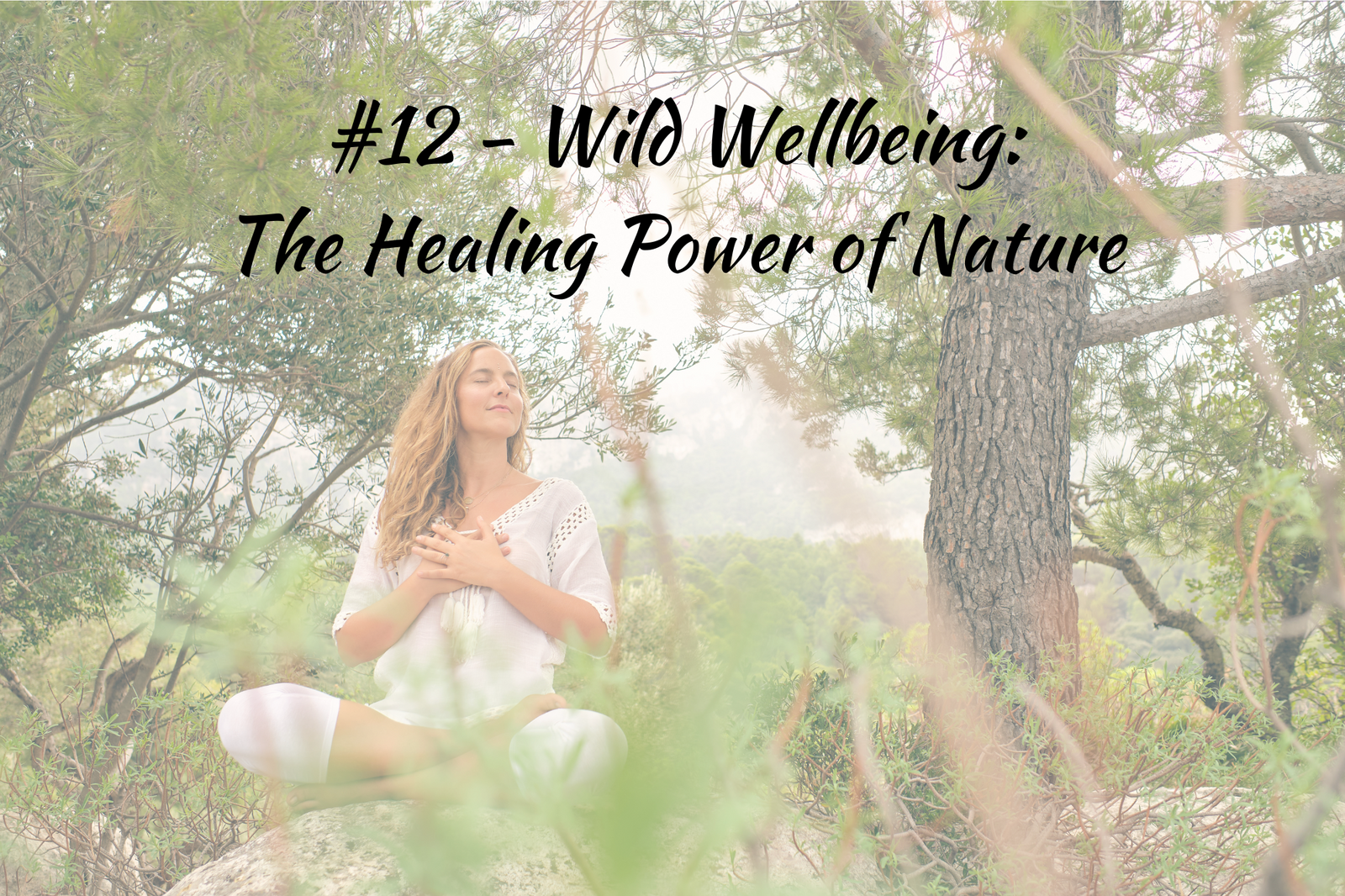
Touch grass! But seriously, what if getting outdoors more could improve your overall health and wellness? Explore the benefits of time in nature and get some ideas for how to get started. Try adapting this Mindfulness Awareness of the Breath practice to do outdoors! You can sit in a natural area or walk slowly on a familiar path. Or try this 5-Senses Meditation outdoors... but please don't taste toxic stuff!
Listen on Substack | Listen on Spotify | Listen on Apple
In this episode, I discuss:
Episode transcript:
"...Let's start by taking a moment to feel your body, feel your breath, allow yourself to arrive to this moment. Take a moment to notice the connection of your feet or your glutes to the surface that you're resting or standing on.mTake a moment to notice the sensations in your hips and your spine. Notice the feeling of your shoulders in relation to your ears.
Is there any tension? Could you soften your shoulders? Notice the feeling of your jaw. Is there any tightness in your jaw? Could you let go of that? And maybe your brow, your temples. A little more softness and ease.
And then notice the feeling of a full in-breath and an easy out-breath.
How are you feeling? How are you doing today? And when is the last time that you were outside? And I don't mean outside walking from house to car or car to store. I mean really outside for the purpose of being outside, maybe taking a nature walk, dog walk, working in your garden.
And when was the last time you spent time outdoors for an extended period, and you didn't have anything else on your mind?
I want to focus on the healing power of nature, time outdoors, what that does for us, our bodies, our nervous systems, and chat a little bit about that generally today.
And then over the next few weeks, let's dive into some more specific research and practices.
I was listening to one of my favorite podcasts recently, and the statistic was stated that Americans spend about 93% of our time indoors.
And I thought, there is no way that that is true.
So I started poking around, and the best estimates that I could find were that Americans spend between 87% and 90% of our time indoors.
Not really that far off, from 93%.
And for me, pretty shocking.
I like to walk outside, I like to hike outside.
I have been conveniently, or for the better, forced to spend even more time outdoors since getting my surprise puppy a few months ago.
But I think, in general, I probably, I mean, I like to think that I far surpass this estimate.
Maybe I would be surprised if I actually tracked it.
Actually, that's a good idea.
Maybe I should track it, and then I'll check in with you on that note in a future episode, and maybe I'll be surprised.
But I do, I try to get outside for at least one long dog walk every day.
I love to do longer walks and hikes on the weekend.
I love to spend time in my garden in the short summer season that we have here in the PNW.
And both through my own experience and through my understanding of the data, I am a firm, firm believer that the more we get outside, the better.
Whereas the kids say these days, go touch some grass.
We spend so much time indoors, so much time in vehicles, a lot of us, so much time connected to our devices or watching a screen of some sort.
And then as we've touched on in previous episodes, often if we're connected to the device or the screen, then maybe there's the added component of we're interacting with negative media or social media.
What would it be like if we could all spend a little more intentional time outdoors?
What would it be like for us as individuals, for our own health and well-being?
What would it be like for our communities?
And is there a potential ripple out effect there?
Are there some benefits for the broader human community as well?
So I want you to just think for a moment about something that you enjoy doing outdoors.
If you don't consider yourself an outdoorsy person, this doesn't have to be something elaborate like backpacking.
Maybe there's a favorite spot near your home or where you work, where there's a beautiful landscape or trees that you like to take in.
Maybe there's a bench you like to sit.
Maybe you like to flower garden, veggie garden, take the dog for a walk, anything that you can think of, that you enjoy doing outdoors.
And then close your eyes for a moment, and just imagine that you are doing that thing.
You are walking in nature, or you are doing one of your favorite tasks in your flower garden, or you're taking your fur baby for a walk, or you are observing a beautiful skyline sunset of the leaves of a tree.
And as you imagine this time outdoors, in nature, notice how even here in the moment of just calling this to mind, that makes you feel.
Do you notice anything in your body, in your breath, in your nervous system?
And so for many of us, we get a sense of the inherent benefit, soothing, calm environment or sensations that being in natural spaces can create.
And there is also a great deal of evidence and research to support this.
And as we as a people become more interested, those bodies of research continue to grow and expand.
So at the very sort of most basic level, we know that spending time in nature reduces cortisol, one of our primary stress hormones, decreases that experience of stress in the body, and creates a sense of overall calmness.
And as we've discussed in previous episodes, we know that when we have that reduction in cortisol, when we spend more time in a rest and digest state, as opposed to that fight or flight state, those health benefits then trickle out into all of our other body systems.
Related to that, there's some evidence that spending time in natural environments brings down our body's overall inflammation.
And inflammation is tied to many chronic health concerns and illnesses.
And then we also know that spending time in nature has a positive impact on our mental and emotional health.
There's a lot of evidence that it brings down symptoms of anxiety, depression, certain mood disorders.
And then it also seems to just generally have an overall mood boosting effect for many people.
And then beyond that, it also seems to have some cognitive benefit.
So folks who spend more time outdoors in natural environments, they tend to show improved skills like concentration, focus, and attention, better memory, better problem solving skills.
And even creativity.
There's some evidence that time spent outdoors can stimulate something called divergent thinking and our problem solving skills, leading to a boost in creativity.
And time outdoors also dramatically improves our sleep, particularly spending time outdoors in natural light during sunrise, sunset, and then limiting artificial light during times of the day that we wouldn't have access to it.
So for example, limiting your screen time right before bed, improves our circadian rhythms, we get better sleep, we get more sleep, and then sleep is another one of those things.
There's just this ripple-out effect.
Good sleep means all our other body systems, mental health, emotional health will benefit.
And then there's some other benefits that may come as well, depending on what kinds of activities we're doing outside.
So if you have a walking group, a gardening group, a paddling group, and you are doing these activities, not only outdoors, in nature, in the fresh air, but in a real sense of community and shared experience, then we also get that benefit to our social connection.
And then if we're doing something that is a more physical activity, so a lot of those things I just mentioned, if we're walking, if we're hiking, if we're cycling, if we're paddling, then there also may be that physical benefit as well.
So looking at cardiovascular health and strength.
And then lastly, I just want to mention the idea of environmental stewardship.
So again, this will depend on what kind of activities you're doing outside.
But often when we are outside, we are fostering this deeper connection to an appreciation of the natural world and the environment.
And this can lead to a feeling of greater responsibility toward and care for the earth and actually lead us toward more sustainable behaviors.
So, anecdotally, research, it's all there.
There's just this enormous, enormous benefit to spending time outside.
So I've sort of thrown out a few examples here of some different kind of things that we could be doing outside, and I want to get just a little bit more detailed about that.
And I want to break these down into three sort of loose categories, if you will.
So, normal things that we're doing on a daily basis that we might do indoors, take in outdoors, outdoor activities, and then specific nature-based therapies.
So the same podcast that I mentioned at the top, where there was that statistic about us as Americans spending 93% of our time indoors, which I did not believe, and it was not far off, they also mentioned this idea of just doing whatever we can outside.
So, is there a meal that you normally eat indoors, that you could take outside onto your porch, your deck, your patio?
At work, is there a space outdoors where you could take a lunch meal outside?
Is there a work call that you could take while you're outside or on a slow walk?
One thing that I have been doing, and I am very fortunate and feel very privileged to be able to do this.
I know that not everyone can, but since I listened to that podcast episode a few months ago, when I get home in the evening, I usually have at least a couple, if not more, of hours of admin and catch up work to do.
So I get home, I put in my first load of work laundry, and then I take my laptop to a little folding table on the deck.
I don't put my earbuds in, and I just work on my porch.
And so little things like that.
How can we bring in a little bit more of that into our ongoing daily activities?
So we're just outside, in the fresh air, in the natural environment, a little more.
And then there are also many activities that we can do.
We can sort of increase how much we are doing that are just normal outdoor activities.
So I've mentioned a lot of these already.
If you have pets, it might be walking or interacting with pets outside.
It might be walking with friends.
It might be hiking.
It might be outdoor sports or games.
It might be yard work or gardening.
It might be beach combing.
And then there are also more targeted or specific, or you could think of kind of like the deep dive of things we can do outside.
And sometimes you'll hear these called like nature-based therapies or eco therapies.
And very easy, straightforward one.
It's just something called earthing or grounding.
So if you have a space in or around your home where you can actually go out and again, as the kids say these days, touch grass.
Could you sit on the grass?
Could you take your shoes and socks off and get your feet in grass or moss or soil?
Is there a place where you could just get your hands in some soft moss?
And there's quite a bit of good evidence.
And again, this is really an area of interest and growth in the research and data right now, that it's really, really good for us to actually physically connect to the earth.
And then going one step further than that is this idea of a nature meditation.
So, could you take yourself somewhere in a natural environment, and do a five senses meditation, or do a guided breath practice, where you are actually outside, focusing your breath more, focusing your senses more, on being in this natural environment, on taking in fresh air, on taking in the beauty of what is surrounding you, and then going even one step further, I want to share this idea of forest bathing that comes to us from Japan.
And I think I'll do a whole episode on this later, because it's such a beautiful practice.
Forest bathing is nature meditation slowed down and intensified.
Often in Japan, a forest bathing excursion might be four hours long.
It is slow, it is intentional.
You are really deeply paying attention to sensing, experiencing, all of your surroundings in a very intentional manner.
And the benefits of forest bathing to mind, body, spirit, to the ability to really down regulate the nervous system and help us cultivate that rest and digest experience is just incredible.
So today, rather than doing a specific practice with you, I have a little challenge for you.
And then I will also put a couple of meditations in the show notes that you could do outdoors.
But for the next week, my challenge to you is to take those activities that I broke down into three.
And could you do one?
And could you add each one in, or add each one in a little more into the next week?
So can you find one activity, drink your coffee or tea in the morning, that you normally do inside and take it outside?
Could you do one specific outdoor activity?
Or if you already have one, maybe do it an additional time or a little longer?
So could you go beach comb with a friend?
And could you do one really intentional nature therapy or eco-therapy activity?
So could you go and actually put your bare feet in some moss?
Could you do a meditation outdoors?
Or if you have access to a forest bathing recording, I will get to one eventually, I promise.
Could you do something like that?
And then just notice how you feel.
Notice how you feel in the moment, how you feel after.
Does it change that day?
Does it change your week?
As always, if it's interesting to you, do a little reflecting or journaling to kind of notice what you're enjoying, what's working, other things that you might like to try.
As always, if you have questions, comments, ideas, feedback for me, please, please, please reach out..."
Sarahlynn Etta | AUG 5, 2024
Share this blog post
 OfferingTree