
Pride Month: Allyship + Meditation for Compassion
Sarahlynn Etta | JUN 17, 2024
Pride Month: Allyship + Meditation for Compassion
Sarahlynn Etta | JUN 17, 2024
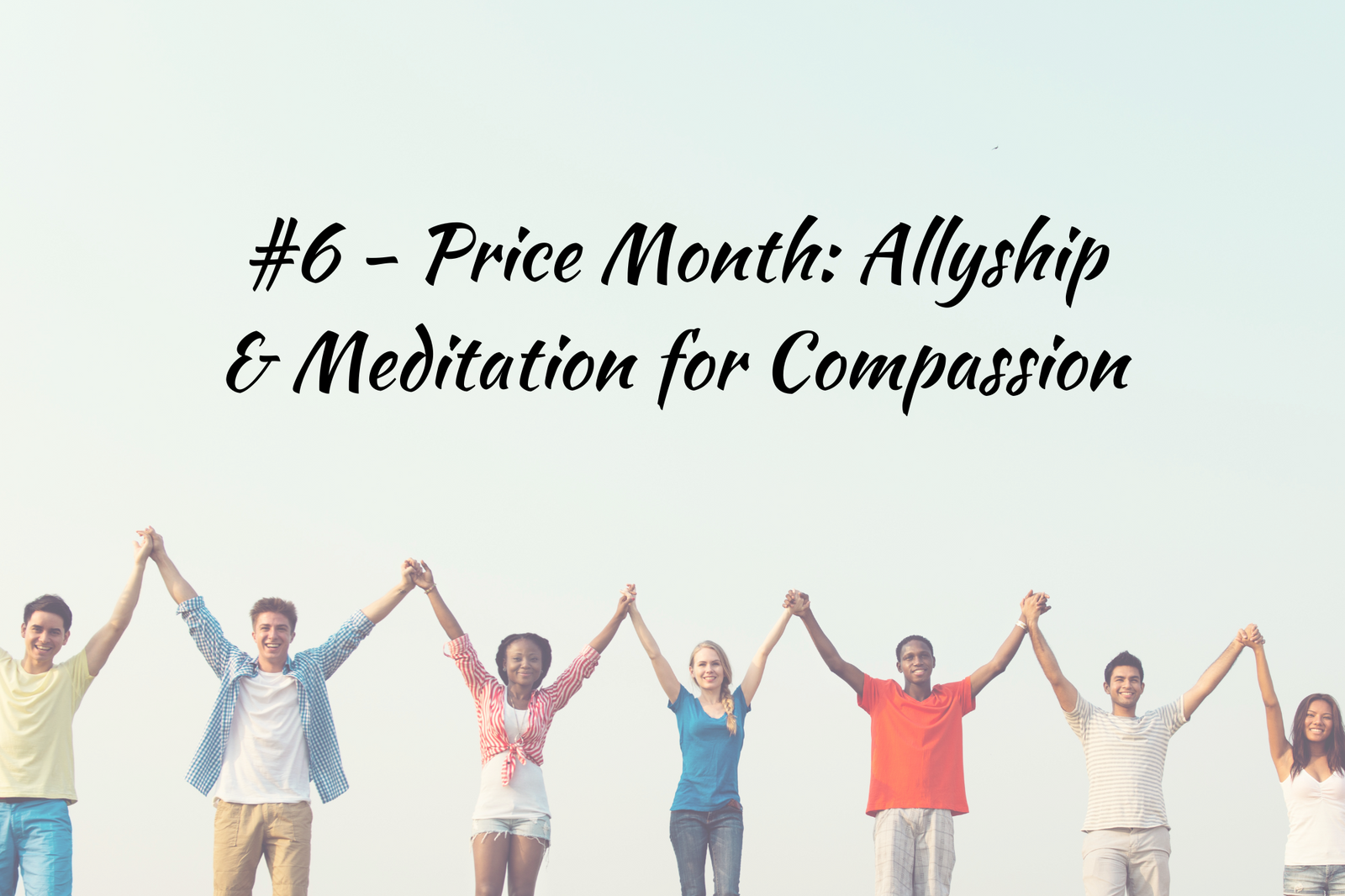
Can mindfulness make you a better ally? For Pride Month, let's take a look at the relationship between meditation and how we show up in the world as humans, as members of our communities, and as defenders of what we value.
Listen on Substack | Listen on Spotify | Listen on Apple
In this episode, I discuss:
Episode transcript:
"...Today's musings are going to be about compassion, compassionate care toward others, even those who we have difficulty with or disagree with.
In continuing honor of Pride Month, I want to dive into the relationship between mindfulness meditation and allyship, and how having a regular mindfulness meditation practice could actually support you in showing up as a better ally.
Michelson says that one of the most powerful aspects of meditation is its capacity to stimulate empathy.
One of the most powerful aspects of meditation is its capacity to stimulate empathy.
And I think empathy is something that the world could use a lot more of, and we could all use a lot more practice, being empathetic towards ourselves, towards those that we love, and particularly toward those that we have strife with or we disagree with.
So because mindfulness meditation is the practice, the process of learning to be with what is, of learning to accept whatever shows up in the moment without judgment, there's sort of a built-in practice right there of learning compassion and acceptance.
And then there are also specific practices that we can do, loving-kindness meditation, which by now you probably know that I love and compassion meditation, which we will do a little bit of later in this episode.
And then mindfulness meditation also helps with our emotional awareness, emotional identification, emotional regulation.
So if we think about sort of emotional intelligence as a skill that's helpful as we interact with others, as we learn to support others, particularly as we learn to support others, hold space for others in really difficult or emotionally charged situations, that's another skill that can be really helpful in us showing up as an ally.
Another piece is that because mindfulness meditation is so much about cultivating observation, it makes us better observers and it makes us better listeners.
So in those situations, we are better able to observe the body language, to listen deeply and skillfully to the people that we are trying to support, or maybe even to the people that we disagree with.
And then additionally, if we are out in the world as really keen observers, we might be more apt to notice aggression or microaggression and be able to step in and take on that really overt allyship in the moment defending people when they are feeling frightened or threatened.
And then in addition to that, a regular mindfulness meditation practice can really help us take a deeper look and a deep dive into ourselves.
So as we sit with our own thoughts, as we sit with our own emotions, as we notice how things come up in our body, we may begin to notice where our own resistance, where our own bias shows up, and that is a piece of information that we can take into our own learning and growth and development to start to learn where some of those things may come from, and how can I start to work to move past them?
And as I continue my own journey of working through those biases or entrenched beliefs that have come from society or culture or religion, it helps to then move me toward and solidify this idea that we are all really the same, we are all human, we are all worthy of love and support and acceptance, exactly as we are.
So what I would love to do today is I would love to move into a compassion meditation.
This will be structured a little bit like my favorite, favorite loving kindness meditation with a little bit of a twist.
So we'll start with a little bit of an open mindfulness meditation journey, a chance to check in, to notice where you're at, setting the intention that this is observation without expectation or judgment, meeting the moment, meeting yourself just as you are.
And then we'll move into a little bit of a compassion meditation.
And as always, I really invite you to notice the responses in your mind, in your emotions, in your body, as you move through this practice.
So go ahead and start to move yourself toward whatever position you'd like to take.
If that is seated for you, if that is lying down, if that is walking slowly through a familiar area.
And as you start to set yourself up in whatever position feels best for this compassion meditation today, I'd like you to begin by noticing where you are connected to the surface you're resting on or connected to the earth.
Check in with your foundation, maybe that is your feet, parts of your legs or your glutes or your back.
Notice that connection in your body.
And then let that awareness begin to travel out to the rest of your body.
Noticing any areas of tension, of tightness, of strain.
If you're seated or lying down, could you find a little more softness and ease in those areas, letting them go completely?
If you're walking, maybe softening the shoulders from the ears, or softening the brow, or softening the jaw.
And then begin to notice the sense of your breath.
Observe your natural breath just as it is in this moment.
Notice the feeling of an inhale.
Notice the feeling of an exhale.
Exhale.
And then maybe take a few longer, fuller breaths.
Softening back to a natural breath.
If you haven't already, perhaps soften the gaze or close the eyes.
And then I'd like you to think of someone in your life that you love or appreciate, someone that you're close to, you have positive feelings toward.
Hold this person in your mind or your heart for a moment.
Notice any changes in your body, any changes in your breath.
Holding this person that you love or appreciate, say to yourself, this person has a body and a mind just like me.
This person has feelings, emotions, and thoughts, just like me.
At some point, this person has experienced sadness or hurt just like me.
At some point, this person has experienced suffering.
Just like me.
And this person has experienced moments of joy, happiness, and peace just like me.
This person wishes to have fulfilling relationships just like me.
This person wishes to be healthy and loved, just like me.
Continue to hold this person in your mind, in your heart.
Notice how you feel.
And then say to this person, may you be well, may you be happy, may you be free.
Notice the feeling of your inhale and the feeling of your exhale.
Exhale.
Notice the feeling of your body connected to the surface you're resting or walking on.
And now, I'd like you to bring to mind a person whom you don't know particularly well, you have neutral feelings toward.
And hold that person in your mind or your heart for a moment.
Notice your body again.
Notice your breath, holding this person in your mind, in your heart.
Say, this person has a body and a mind, just like me.
This person has feelings and emotions just like me.
At some point, this person has felt hurt or confused just like me.
At some point, this person has experienced pain or suffering just like me.
This person has also experienced happiness and peace, just like me.
This person wishes to have fulfilling relationships, just like me.
This person wishes to be healthy and loved, just like me.
Hold this person in your mind, in your heart, and say to them, may you be well, may you be happy, may you be free.
Notice your body.
Notice your breath.
Call to mind a person with whom you have had or are having difficulty.
Someone that you have disagreed with, someone that has caused you strife.
And as you hold this person in your heart, in your mind, pay particular attention to the response in your body, in your breath, in your thoughts, in your emotions.
In your emotions.
Holding this person that you have had difficulty with.
Say, this person has a body and a mind just like me.
This person has thoughts, feelings, emotions just like me.
At some point, this person has been sad, angry, hurt, confused, just like me.
And this person has experienced pain and suffering, just like me.
This person has experienced peace and joy and happiness just like me.
This person wishes to have fulfilling relationships, just like me.
This person wishes to be healthy and loved just like me.
Notice your body.
Notice your breath.
Holding this person with whom you've had difficulty in your mind or your heart.
Say to them, may you be well.
May you be happy.
May you be free.
And come back to the experience of your physical body.
Noticing the points of connection between your body and where you're walking or resting.
Notice other sensations throughout your body, where there are areas of tension or tightness or discomfort.
Where there are areas of discomfort.
And then bring in awareness to your breath.
And take a moment to observe the sense of your inhale and your exhale, accepting your natural breath as it is in the moment.
And if the eyes are lowered or closed, begin to slowly blink or flutter the eyes back toward fully open.
If you're seated or lying down, begin to bring subtle movement back into your body.
And if you like, this can be a nice opportunity to reflect on this practice or to journal if you enjoy that.
And I invite you to think about how you can carry a little more compassion into your day.
How can you show up as a person who's more kind, compassionate, accepting, not only towards yourself and the people that you love and agree with, but toward everyone?
Thank you so much for being here.
Thank you so much for listening.
I will see you next time..."
Sarahlynn Etta | JUN 17, 2024
Share this blog post
 OfferingTree